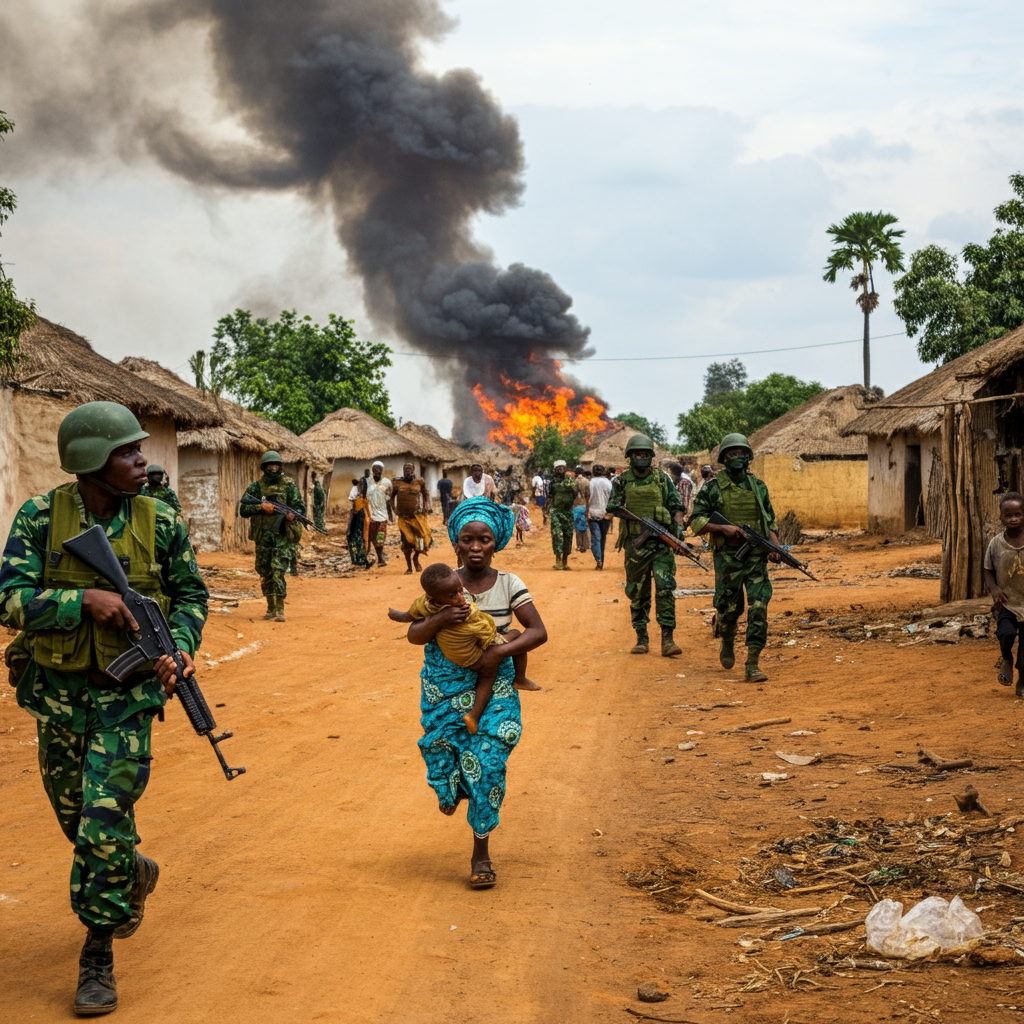
Nigeria's Middle Belt, a region where religion and ethnicity intersect in a complex tapestry, has become a hotspot for deadly communal clashes. These conflicts, primarily between nomadic Fulani herders and Christian farming communities, have devastated the region, leaving scars that run deep.
The roots of this violence lie in a complex web of factors such as desertification which has exacerbated the issue, pushing herders further south in search of grazing land, often encroaching on farmlands. This factors also includes competition for resources and has in the past further inflamed by religious and ethnic differences, creating a combustible situation. Some of these factors are further described below.
Climate Change and Environmental Stress: Environmental changes, including desertification and erratic rainfall patterns, have made arable land and water increasingly scarce. Herders are forced to move further south into farming regions, intensifying competition for these dwindling resources.
Population Growth: Rapid population growth adds further pressure on the land. As the population expands, the demand for food and livestock increases, leading to more land being cultivated and less available for grazing.
Political and Ethnic Tensions: Historical ethnic and political tensions between communities exacerbate disputes. Political manipulation and favoritism can deepen mistrust and foster conflict.
Competition for Land and Resources: The primary cause of conflict is the competition for land and resources. Farmers and herders both rely on land for their livelihoods, but their needs often conflict. Farmers require land for cultivation, while herders need it for grazing.
Weak Governance and Legal Frameworks: Ineffective governance and inadequate legal frameworks fail to address land rights and resource management. This often leaves conflicts unresolved and allows them to escalate.