Tinubu’s State of Emergency Escalates Crisis, Industries Brace for Impact
Port Harcourt, Nigeria – March 2025
In a dramatic escalation of Nigeria’s political crisis, President Bola Tinubu declared a state of emergency in Rivers State on March 18 2025, suspending Governor Siminalayi Fubara for six months and appointing retired Vice Admiral Ibokette Ekwe Ibas as Administrator. This move has sent shockwaves through political and business circles, raising urgent questions about stability, governance, and economic fallout. For industries operating in Rivers State, the unfolding drama is not just a political spectacle—it’s a looming threat to stability, operations, and profitability.
Rivers Political Landscape: A House Divided
The rift between Governor Fubara and Wike, now the Federal Capital Territory (FCT) Minister, has deepened in recent months. The state assembly, split into factions loyal to either Fubara or Wike, has become a battleground, with sessions often descending into chaos.
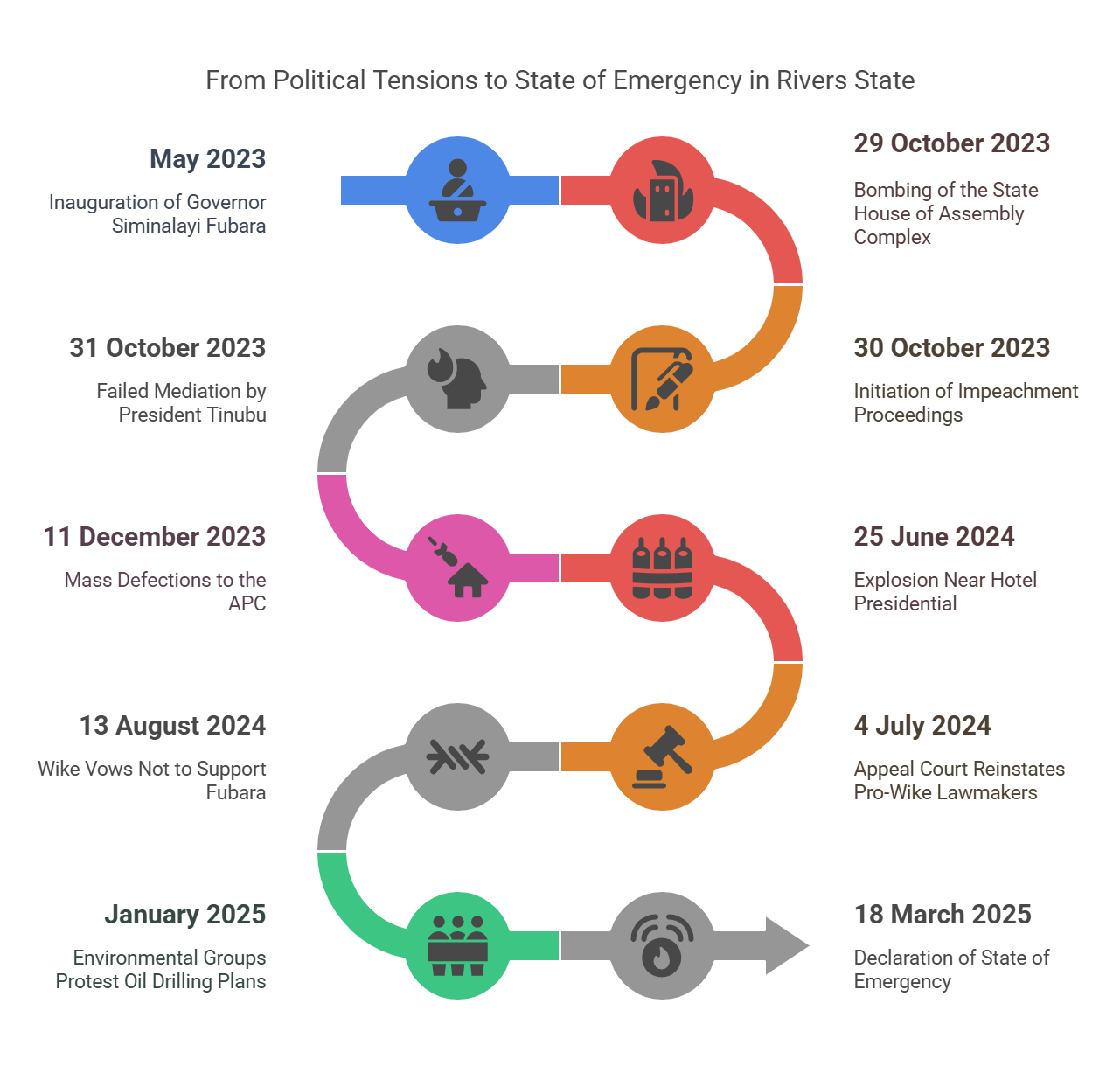
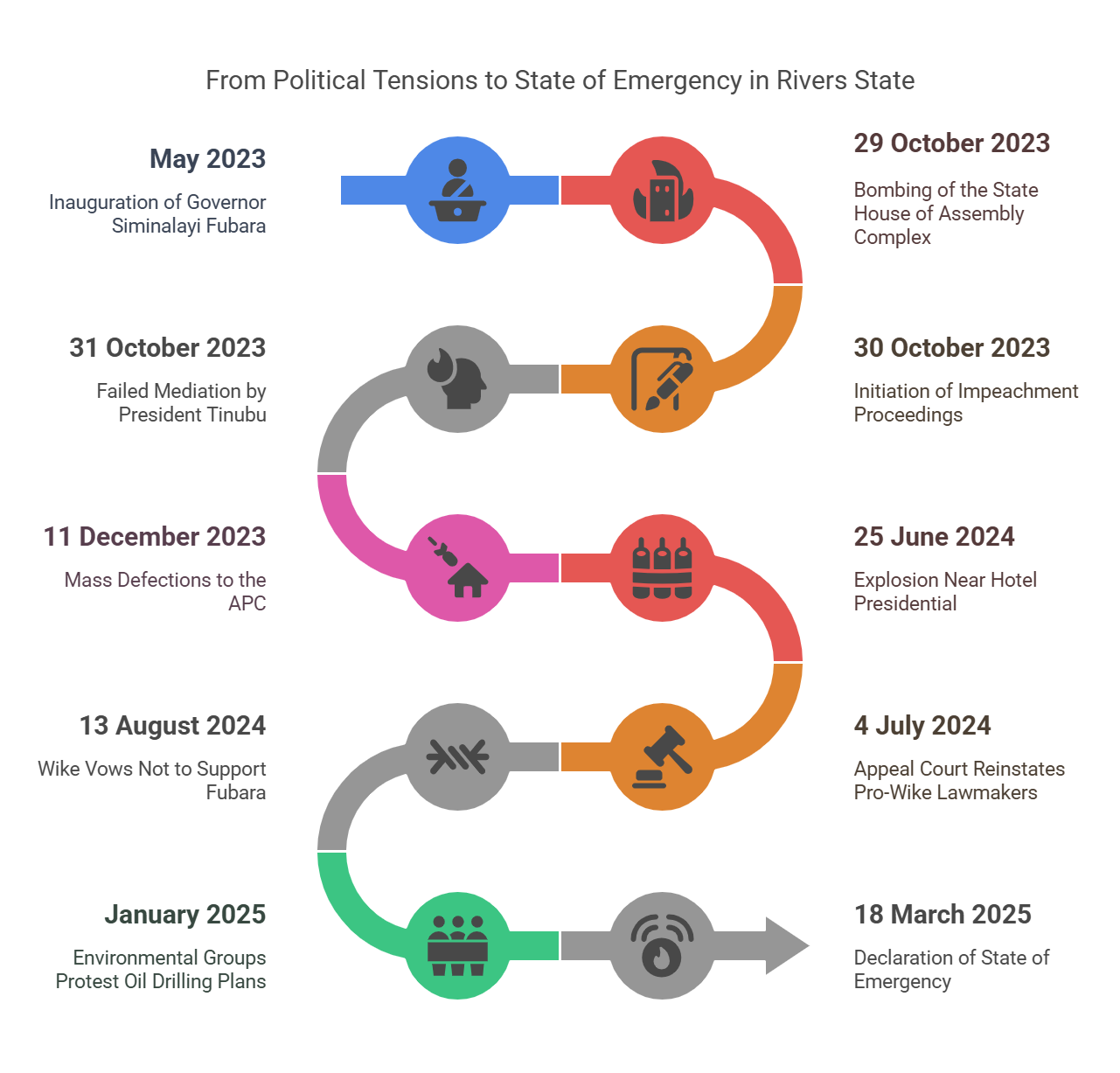
What began as a power struggle within the Peoples Democratic Party (PDP) has morphed into a full-blown political crisis, complete with allegations of sabotage, defections, threats of impeachment and now declaration of state of emergency. This state of emergency declaration is fraught with legal and political risks. Constitutional lawyers debate whether Tinubu’s suspension of Fubara exceeds executive authority, with the PDP already threatening litigation.
Political instability is not new to Rivers State, a region historically plagued by fierce rivalries and power tussles. However, the current crisis is particularly concerning due to its potential to spill over into the broader socio-economic fabric of the state. Rivers State is not just any Nigerian state - it is the heart of Nigeria’s oil and gas industry, home to the Port Harcourt Refinery, Onne Port, and numerous multinational corporations. Any disruption here sends ripples across the entire Nigerian economy.
Timeline of Crisis (2023-2025)