As of April 2025, the security landscape in Nigeria continues to present serious challenges to both local and international businesses. The persistence of terrorism, insurgency, and a troubling rise in kidnapping-for-ransom cases across various states poses a tangible risk to operations, personnel, and supply chains.
Despite notable efforts by the Nigerian government and security agencies, terrorist groups like Boko Haram and ISWAP (Islamic State West Africa Province) remain active, particularly in the North-East. Their attacks, although less frequent than in previous years, have become more strategic and targeted, often disrupting movement, trade routes, and logistics hubs. In the North-West and Middle Belt, banditry and inter-communal violence have surged, creating an environment of unpredictability. Businesses in agriculture, mining, and manufacturing face logistical delays, while telecom operators and energy providers have reported repeated sabotage of infrastructure.
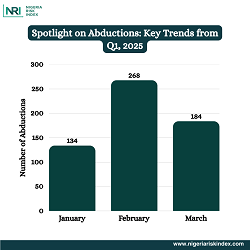
Kidnapping for ransom has evolved into a lucrative enterprise for criminal networks. From highway abductions in Kaduna and Kogi states to high-profile kidnappings in Lagos and the South-East, no region has been immune. Between January and March 2025, at least 586 reported abductions have occurred across 29 states, according to data from Nigeria Risk Index and other media sources, corporate staff including expatriates are prime targets, compelling companies to increase spending on private security, journey management, and crisis response capabilities.