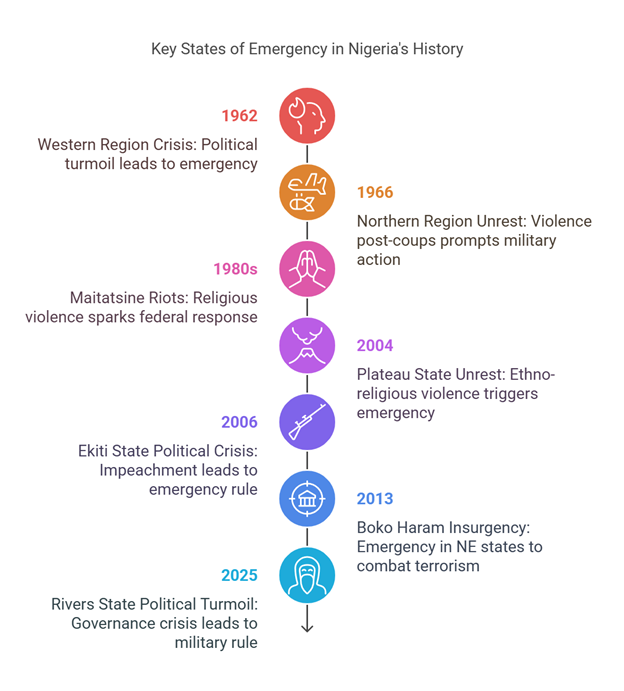
Since gaining independence in 1960, Nigeria has encountered various challenges that have led to the declaration of states of emergency. These declarations, rooted in constitutional provisions, have addressed political crises, security threats, and civil unrest. This article explores these pivotal moments, their legal foundations, and the implications of such measures, culminating in the recent declaration in Rivers State.
Basis for State of Emergency
Section 305 of the 1999 Nigerian Constitution empowers the President to declare a state of emergency under specific circumstances, including:
1. War or Imminent Danger
When the Federation is at war or faces the threat of invasion.
2. Breakdown of Public Order
Significant breakdown of public order and public safety requiring extraordinary measures to restore peace.
3. Natural Calamity
Occurrences like natural disasters affecting the community.
4. Public Danger
Any other public danger that poses a threat to the existence of the Federation.
Additionally, a state Governor, with a two-thirds majority resolution from the State House of Assembly, can request the President to declare a state of emergency if situations within the state necessitate such action.